

The opening week of the Australian Open 2026 took a sharp turn into the spectacular with the debut of the One Point Slam. Forget the grueling three-hour marathons; this was tennis condensed into a single, heart-pounding exchange. It was a high-stakes tennis exhibition where a single unforced error meant immediate elimination and a missed chance at a life-changing payday. The energy in Rod Laver Arena was frantic as fans realized that the traditional hierarchy of the sport was about to be challenged in the most volatile way possible.
The format stripped the game down to its psychological bones. For the global icons, the pressure was immense—one mistake and the headlines would be devastating. For the challengers, it was the ultimate “nothing to lose” scenario. As the lights dimmed for the first round, the crowd knew they were about to see something that defied every standard betting line in the sport, turning the blue hardcourts into a theater of sudden-death drama.
The Underdog’s Blueprint for Victory – One Point Slam
Jordan Smith didn’t just walk onto the court and get lucky; he arrived with a tactical plan that exploited the unique physics of the tournament. A respected coach at the Castle Hill Tennis Academy, Smith utilized his experience as a former top junior to maintain a “brick wall” defensive posture. He knew that in a one-point sprint, the player who tries to be too spectacular is often the one who ends up watching from the sidelines.
The tournament rules provided a fascinating twist that helped level the playing field. Amateurs were permitted their standard two serves, while the top-tier pros were forced to survive on a single delivery. This “Amateur Advantage” became the cornerstone of Smith’s run, allowing him to play with a safety net that the world’s best simply didn’t have. The following table highlights the stats that defined the night:
| Highlight Metric | Jordan Smith (Amateur) | The Pro Field (Elite) |
|---|---|---|
| Serve Allowance | 2 Attempts (Safety Net) | 1 Attempt (Maximum Risk) |
| Winning Strategy | High-depth defensive play | Aggressive winner-seeking |
| Biggest Scalp | Jannik Sinner (World No. 2) | N/A (Most were eliminated) |
| Financial Stakes | Life-changing $1M payout | Reputation & $1M prize |
| Crowd Vibe | Local Sydney Underdog | Global Superstar Pressure |
Shockwaves: When the Global Stars Faltered

The “quick-read” highlights of the night read like a fever dream for tennis news fans. One by one, the giants of the ATP and WTA tours fell victim to the “one-point” pressure cooker. It was a night of collapses that no one saw coming, as the psychological weight of the $1 million prize proved too much for even the most seasoned champions.
Key moments included:
- The Sinner Double Fault: World No. 2 Jannik Sinner seeing his only serve clip the net and land wide against Smith.
- The Alcaraz Volley: Carlos Alcaraz attempting a high-risk winner against Maria Sakkari that sailed just long.
- The Gauff Defense: Coco Gauff being pushed into a long rally by a local qualifier before finding the net.
- The Crowd Surge: The deafening roar as Smith took down AFL star Bailey Smith to start his momentum.
The Dark Horse: Joanna Garland’s Professional Polish
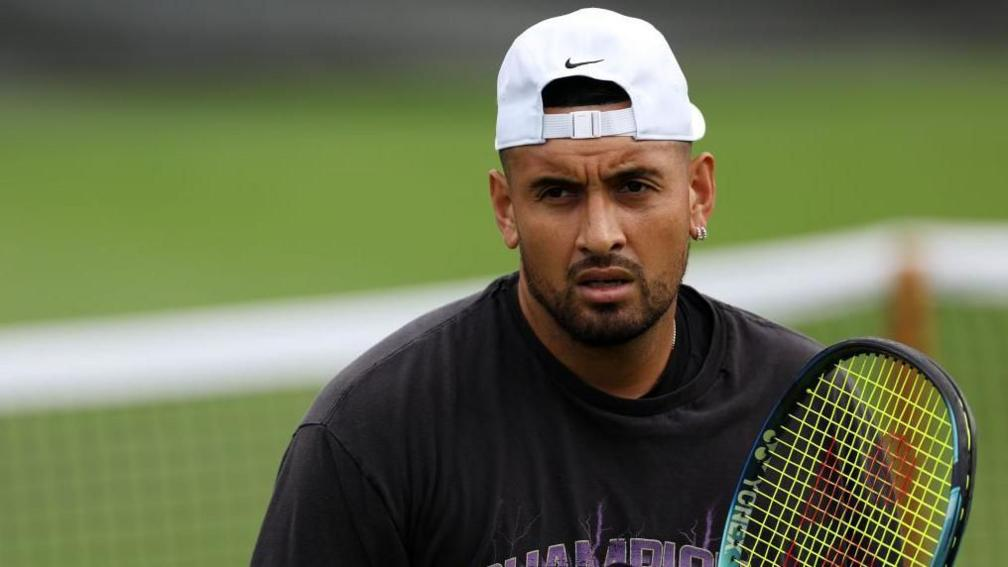
While the world focused on the “coach from Sydney,” Joanna Garland was quietly putting on a masterclass in focus. The World No. 117, known to fans as “Radiohead” for her ability to tune out the stadium noise, was the only professional player to successfully navigate the chaos of the bracket. Representing Chinese Taipei, Garland utilized her recent momentum from the Workday Canberra International to dismantle a field of heavyweights.
Garland’s run was a testament to the grit found on the lower rungs of the pro tour. She didn’t let the One Point Slam‘s “gimmick” status affect her preparation, treating every point with the intensity of a Slam final. She took down Zverev and Nick Kyrgios with clinical precision, ensuring that the final was a true clash of styles. Even as the Joanna Garland One Point Slam runner up, she proved that rankings are secondary to mental toughness when the clock is ticking.
The Million-Dollar Mistake: How it Ended

The final point was the pinnacle of the night’s drama. After a quick game of “Rock, Paper, Scissors” to decide the serve, Garland stepped to the line. The stadium was so quiet you could hear the hum of the air conditioning. Garland delivered a flat, fast serve that Smith blocked back with a short, controlled swing. The rally was on, and for five seconds, $1 million hung in the balance.
The climax was a heartbreaking error for the pro:
- Garland moved inside the baseline to take a forehand on the rise.
- She aimed for the cross-court winner, the same shot that won her a WTA 125 title weeks prior.
- The ball caught a gust of wind or perhaps a moment of “heavy arm” tension and landed wide.
- Smith dropped his racket in disbelief as the umpire confirmed the results of the Australian Open exhibition event 2026.
- The Sydney coach was officially a millionaire, and the “brick wall” had stood its ground.
Conclusion: A New Chapter for Amateur Tennis
The legacy of the 2026 One Point Slam is already being written. For Jordan Smith, the victory means a home in Sydney and a $50,000 equipment boost for the Castle Hill Tennis Academy. For the sport of tennis, it proves that the gap between the professional tour and the local community is a lot smaller than we think. This event wasn’t just about the money; it was about the thrill of the impossible.
As fans flock to see where to watch the One Point Slam highlights, the conversation is already shifting to next year. This format has successfully bridged the gap between a tennis exhibition and a global phenomenon. Jordan Smith’s name is now part of the history of Rod Laver Arena, proving to every local player that on the right night, in the right moment, one point is all you need to change your life forever.


