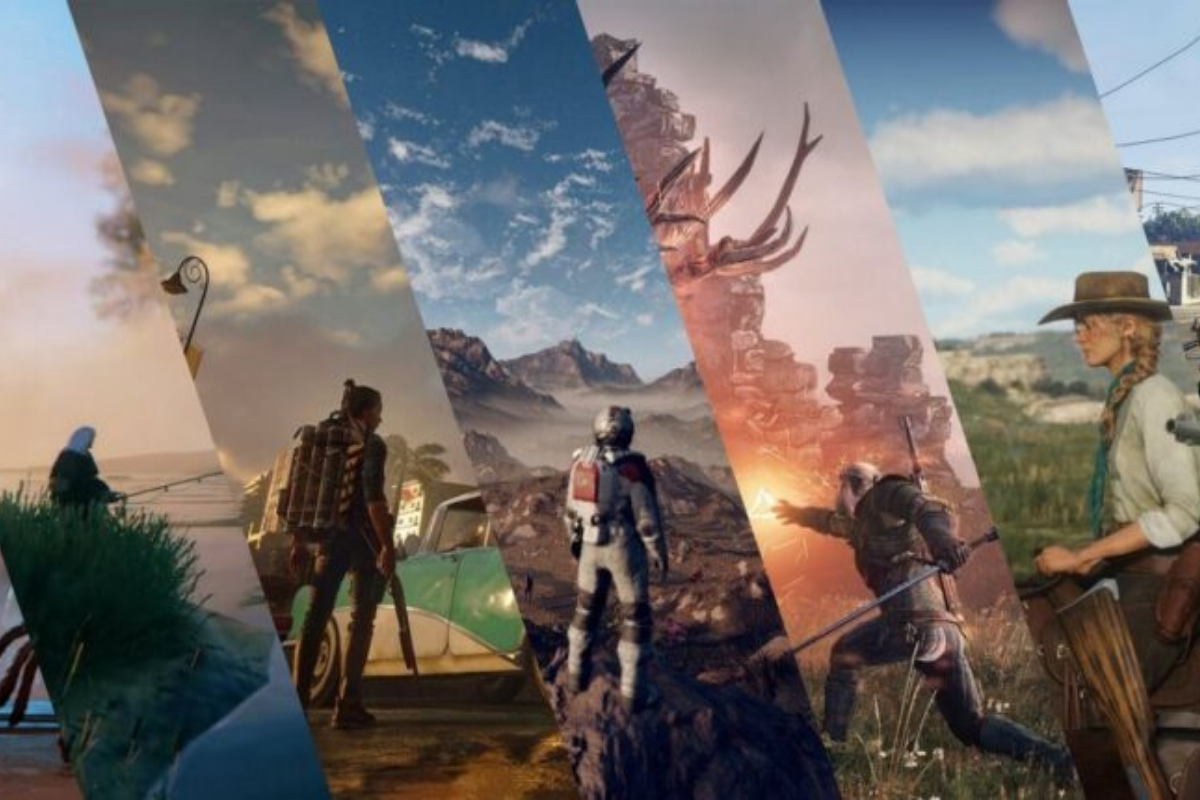
The 2026 gaming calendar is often celebrated as a pinnacle of digital entertainment, yet the path to these releases was paved with significant structural challenges. As we analyze the Top5 Epic Games 2026, it becomes evident that the industry’s push toward hyper-realism and dense social simulation has reached a breaking point. Studios are no longer just fighting bugs; they are fighting the logistical gravity of decade-long development cycles and the volatile nature of player sentiment. This year’s “post-mortem” reveals a recurring theme: the struggle to maintain a coherent creative vision while navigating the ballooning costs and technical bottlenecks of the current console generation.
| Development Risk | Game Title | Primary “Pain Point” | Current Resolution |
|---|---|---|---|
| Release Slippage | Grand Theft Auto VI | 13-year development gap | Staggered console-first launch |
| Mechanical Bloat | Resident Evil Requiem | Viewpoint switch complexity | Hybrid perspective engine |
| Handheld Parity | The Duskbloods | Switch 2 hardware limits | Bespoke optimization |
| Tone Misalignment | Marvel’s Wolverine | Mature rating vs. Brand | Hard R-rated commitment |
| Genre Confusion | Directive 8020 | Narrative vs. Mechanics | Survival-lite integration |
Analyzing the Structural Risks of the Top5 Epic Games 2026

The most significant “what went wrong” in modern gaming history centers on the development timeline of Grand Theft Auto VI. A thirteen-year gap between entries created a cultural vacuum that few franchises could survive. The primary risk during production was “scope creep”—the desire to make Vice City so reactive that the game’s release date became a moving target. Rockstar had to reconcile the pressure of a 2022 security breach with a changing internal workplace culture, leading to a development path that prioritized internal stability over rapid delivery. This resulted in a product that is undeniably massive, yet one that serves as a reminder of how the pursuit of perfection can stall an entire industry sector.
- Asset Management: The move to a hyper-dense urban environment led to initial memory-leak issues on console hardware.
- AI Synchronization: Coordinating thousands of NPCs with unique social media schedules nearly crippled the game’s physics engine during mid-production.
- Leaking Infrastructure: The pre-alpha leak forced a defensive development stance, arguably limiting the studio’s early community engagement.
The Friction of Hybrid Design in Horror

Capcom’s Resident Evil Requiem faced a distinct design crisis: the “identity split.” By attempting to satisfy both first-person and third-person fans, the development team essentially doubled the work required for every room, hallway, and jump-scare. Early playtests revealed that a horror sequence designed for a wide third-person lens lost its intimacy in a tight first-person view. This “what went wrong” required a late-stage redesign of the Raccoon City ruins to ensure the environment functioned as a dual-purpose stage, nearly causing a catastrophic delay into 2027.
Similarly, Directive 8020 struggled with the transition from “cinematic drama” to “survival game.” Supermassive Games initially implemented survival tools that were too intrusive, breaking the atmospheric tension they are known for. The post-mortem of their 2025 build showed a game that was fighting its own identity—too mechanical for casual fans and too scripted for hardcore survivalists. It was only by stripping back the UI and moving toward “diegetic” wrist-mounted gadgets that the team found a balance, though the initial friction left some early chapters feeling less polished than the final act.
Performance Bottlenecks and Handheld Limitations

FromSoftware’s venture into the Top5 Epic Games 2026 with The Duskbloods highlights the danger of hardware-specific ambition. While the game was intended as a flagship for the Nintendo Switch 2, the “Bloodsworn” multiplayer architecture initially proved too taxing for the handheld’s CPU. This led to a difficult “downgrade” phase where the team had to simplify some of the more complex Gothic geometry to maintain a stable 30fps. The risk here was clear: the studio’s reputation for uncompromising quality was briefly at odds with the technical reality of the platform’s mobile chipset.
- Optimization Fatigue: The team had to redo the lighting engine three times to ensure the vampire-themed shadows didn’t crash the system during 8-player sessions.
- Netcode Instability: Integrating 8-player PvPvE into a seamless, vertical world created significant latency issues during the 2025 alpha phase.
- Bespoke Coding: Much of the game had to be written specifically for the Switch 2’s unique architecture, limiting the ease of potential ports to other systems.
The Peril of Mature Branding in Superhero Media
Insomniac Games took a calculated but dangerous risk with Marvel’s Wolverine. The primary challenge was the “tonal pivot.” After years of building a brand on the vibrant, heroic foundations of Spider-Man, the studio had to convince both investors and the public that an R-rated, gore-heavy experience was the right path. Internal reports suggest that early versions were “too safe,” failing to capture the feral essence of Logan. Correcting this meant a complete overhaul of the combat system to include real-time dismemberment and flesh-regeneration, a move that added significant time and budget to the project while narrowing its potential market.
This decision serves as a post-mortem on the “all-ages” superhero trend. By choosing a “wide-linear” design over an open world, the team was able to salvage the project’s performance, but the move sparked debates about whether the studio was losing the mass-market appeal that made them industry leaders. It represents a moment where creative integrity—the need to stay true to a character’s brutal nature—prevailed over safe commercial logic, though not without leaving several cancelled “family-friendly” prototypes on the cutting-room floor.
Final Thoughts on the Hard-Won Successes of 2026
Looking back, the Top5 Epic Games 2026 are defined as much by their struggles as they are by their successes. We have moved into an era where “what went wrong” is an essential part of the story; these games are simply too large to be perfect. From the long silence of Rockstar to the technical compromises of the Switch 2’s library, the year has been a masterclass in crisis management and creative pivots. As players finally explore these worlds, the lessons learned in 2026 will undoubtedly serve as the cautionary foundation for the next generation of AAA development, ensuring a more sustainable future for the medium.